
A unique shade of pink part 3 - the first appearance of Steam Pink and the Guitar Apothecary
- Gyorgy Henyei Neto

- Apr 18, 2025
- 7 min read
Updated: Apr 19, 2025
The first idea
I knew I wanted to have something to come out of this acquisition. I just didn’t know what. I continued making music, producing and releasing my own records and trying to use the guitar as much as possible, and understand how I felt about it.
Weeks, months after perhaps, I found myself participating in a workshop for small business enterprises and how to idealise a concept. At that point I did try to put something on paper, maybe conceptualise a shard of an idea. My first design was a magazine. Not something absolutely new or groundbreaking, but it was something. I had a more or less developed initial idea. The magazine would cater to collectors mainly, and would have in each of its issues a deep dive into one single piece of a collection. The idea, I thought, was novel. I hadn’t seen a guitar magazine that would actually dedicate itself to collections and collectors. Guitar magazines in general have as their public the most wide and generic of audiences. The average consumer, as I mentioned in the previous post.
What I wanted was to produce something that would be of interest to the focused collector, the prosumer, like myself.
The other idea was a little more ambitious, and in a way, quite tighter. I wanted to create a space for a collection to start brewing, for collectors to gather, and for I to be able to provide assistance and consultancy for clients on how to go on to purchase a high end guitar. I wanted to become a guitar consultant, someone who would source, find, and select guitars for his clients.
Everyone who was participating in the workshop were asked to share and elaborate on their own ideas, bringing them full on business or mere ethereal dreams. Mine was somewhere in between, veering towards the dream side. Just before my turn came, another attendant shared his idea. It was extremely similar to my magazine idea. That really put me on the back foot. What could I do then? Half of my ideas were now taken, and it was the more conceivable idea nonetheless.
But instead of panicking, I found myself quite assured that I should then focus on the second idea. And that was a good choice.
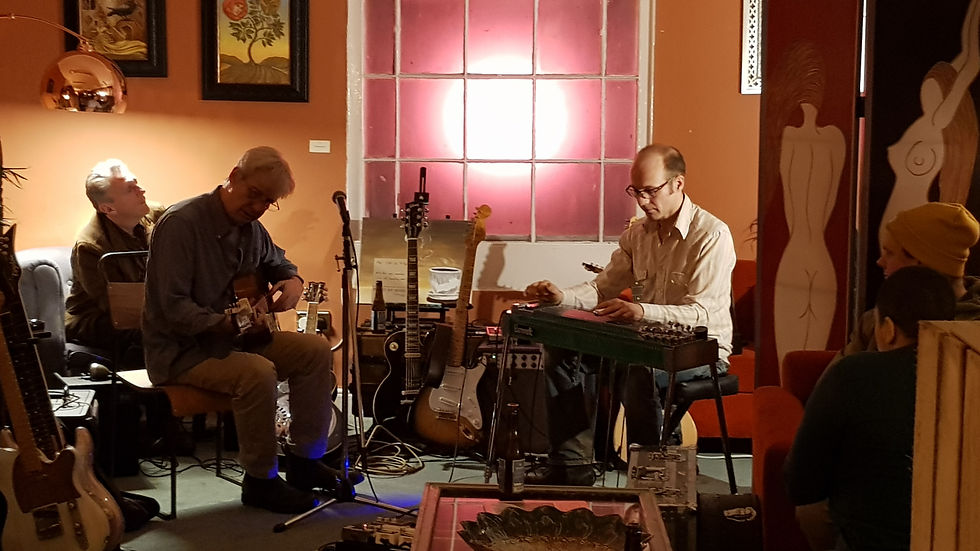
The first event
After the seminar, I met with the person who had the idea of producing a music based magazine for Bath and Somerset. We exchanged contacts and began concocting a collaboration.
His idea was to organise a relaunch of his music magazine, a project he had been working on for quite some time, and had relative success. He told me a great deal of stories and tales, of musicians he met and interviewed, of partners coming and going, and his plans for the future. It was almost like hearing my own ideas, but in somehow a different language or accent perhaps.
Yes, I wanted to create a zine, a printed publication that would create this network of interesting art and individuals, but there seemed like the point where we diverged. While his goal was to focus on the people and their quirks, manners, and artistic outputs, mine was to look at how objects and things can tell people’s stories, somehow even better but just existing.
In a way, it was a relief. It was not indeed my idea.
I was happy, however, to put my plan into this melting pot, and see what would come out.
To tell this story properly, I went back into my communication over email. We’ve met only once at that point, and mostly would talk via messages. He told me that the plans were moving forward quickly, and that he now had a venue, and I was to participate as a partner on the relaunch of his magazine.
Amazing, I thought. I would be able to not only take part of this event, but also maybe meet others who would be interested in collaborating. I was to then meet with the venue owner and chat with them, seeing what and how big my part in this event would be.
Little did I know that I would go from being a small section of the event, to mainly organising and helping running it.
During this time I got to know the owner and managers of this small, but quite interesting venue in Bath. The Drawing Rooms are a members’ club and event house that had recently opened its door, as was looking for visibility, the magazine launch was just what they needed.

Collabs and partners
The launch event was a success. I am not sure how much that actually helped the magazine and its publishing, but for me and for my project, this elevated my position and made people aware of my existence. It was quite the experience.
I maintained a close connection with the owners of the venue, and after several meetings and discussions with the managers, we decided that I, and Steam Pink, would have a solo event myself.
That was one of the most incredible few months. Organising my own event, where my business, my ideas, my projects, and my decisions would be the centre of attention was both absolutely scary and amazingly enriching.
I had so many ideas, so many possibilities, and was so excited to have that on my shoulders, that one of the most easily made mistakes someone in this position would make almost took me and project by storm. Trying to do everything.
I wanted it all, and wanted it now.
And I knew, deep inside, that that would not be possible. I am so grateful to the friends I made at the venue, because they helped me not just run the event, but also, by narrowing down my ideas, provided me a more focused and concise path.
From that collaboration, not only Steam Pink started with the right foot, but also the event itself, at that point named Guitar Apothecary, took shape and form.


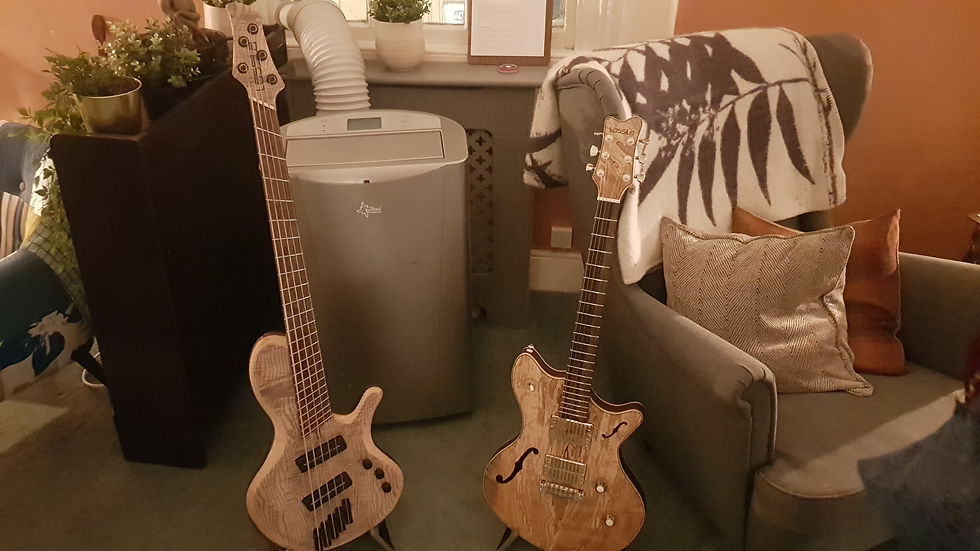
The Guitar Apothecary and Steam Pink
I wanted to create more an experience than a single event. The idea behind the Guitar Apothecary was not just o entertain, but to develop a network of collectors, musicians, and enthusiasts, all surrounding the amazing activity that is finding and playing fantastic and unique musical instruments.
For that, I thought, it would not be sufficient to have only myself and I at centre stage. Yes, a niche collection hub is nice in the context of a magazine launch, but how would that survive on itself?
It was decided that the marketing of the event would be mostly dealt by the venue, and that the actual content was my job. Quite the responsibility, but one that I took with both hands. It was time to prove that a collector’s hub was indeed an interesting project.
First step was to reach out to some of the business and friends in Bath.
Guitar Bitz is the best guitar shop you would ever have the pleasure to encounter. They carved their space in a city that was in need of a friendly, open, and sincere musical experience. In a town where the amount of money you have to spend can open many doors, the people at Guitar Bitz do much more than just offering an incredible selection of instruments. They offer attention and intent.
Yes, you can go and find a cheap, beginner guitar, just like any other shop. But if you climb the steps to their first floor, you will find a haven of impossible findings, from one of a kind Les Pauls, to heavily used Strats, to coll as hell, pointy B.C. Rich’s. And I have the honour to be their friend. They were the first guests.
If you want to run a guitar event, you can have the brand guitars, but you also need the oddball, the strange, the interesting, the handmade perhaps. There enters Lassila Guitars. I met Hayden through a mutual friend, and I immediately thought that having him and his instruments at the event would be such a great idea. It would maybe boost his visibility and sales, but it would for sure make the event explode. The Lassilas were the second guest.
And what is a musical evening without a musical act? Again, through the great people at the drawing rooms, I’ve met Zac Ware. Zac is such a great musician, such a versatile and talented guitarist, and so open and generous with his time and knowledge. Other than being part of the huge act that is The Proclaimers - one that needs no introduction - he also works on his own writing, composing, and recordings, which include many projects and collaborations.
It was an easy friendship that was formed, and he was incredibly happy and excited to be part of this project. We even recorded a few things together, things that I might share in the future.
The three pillars of the Guitar Apothecary were assembled, and the foundation of the success of the event were now in place.
In itself, the evening was incredibly tasking and tiring. That's what I can physically recall from that day. I was so tired, my head was hurting, and my face was tense from smiling and chatting. Emotionally however, that was one of the most intense, fascinating, and proud moments of my life. Organising, coming up with a whole concept and idea, and then implementing all my wishes and desires, working as a director and producer, is a feeling of achievement that is hard to forget and to be surpassed. The amount of people I met, the actual joy and interest people had in the whole project, the gravity pull that that one evening had in people that they chose to leave their homes on a Thursday evening to come down and check cool guitars, listen to good music, and converse on a shared subject: collecting.
That was a dream that indeed came true. I did bring people together to discuss and show their collections. That was the intent of Steam Pink, and that was the role of the Guitar Apothecary.

There are so many stories of the organisation and structure of the evening, that I might have to put in another series of posts.

Comments