
A unique shade of pink Part 2 - The birth of Steam Pink
- Gyorgy Henyei Neto

- Apr 15, 2025
- 5 min read
The origin of the project, Steam Pink, goes hand in hand with the guitar I acquired a few years ago now. In the previous post I mentioned, in a somewhat dramatic way, how I came across this unique, one of a kind instrument, and how that really touched me and made me even more interested in guitars, but also in collecting and sharing that collection and knowledge.
Let me share the beginnings of this journey.
I came back home that day with a guitar, a story, and a figment of an idea. Let’s start with the guitar itself.
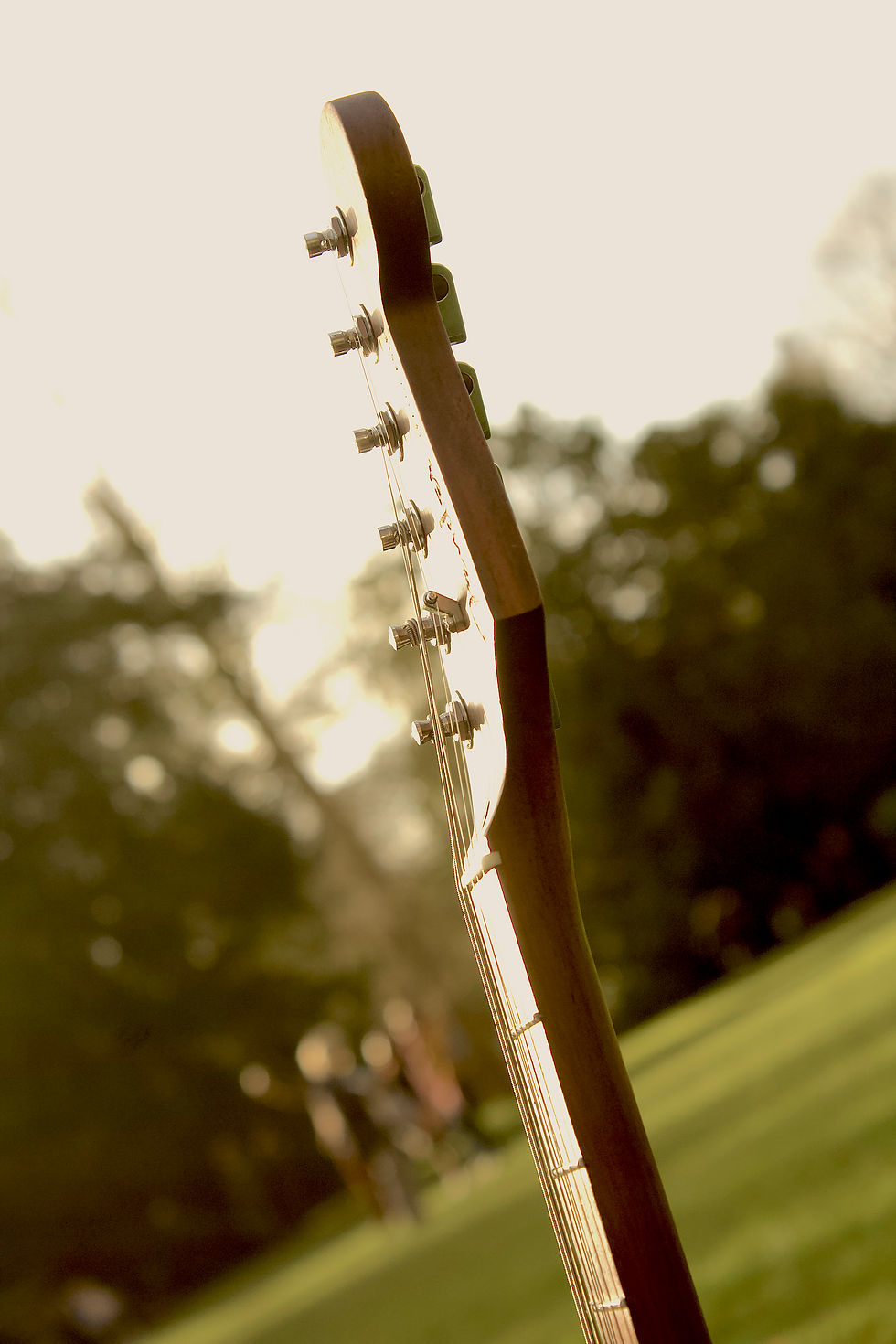
In 2018, Fender was developing a few new ranges on their American-made instruments, trying to both address an expansion in the market, mostly due to the internet’s influence, but also on the high-end consumer, what is called most of the time in the tech industry as prosumers. Prosumers, a conjunction of the words professional and consumer, is a very special position in the tiered pyramid of clientele a company has.
In the tech sphere, a prosumer is a consumer that has positioned themselves in the realm in between levels. They are part of the consumer space, meaning, they have an income, independent of amount, that they will use to purchase a piece of tech. Gaming, PC-building, hi-fi, photography are some of the spheres that prosumers are found more often.
Those people are looking to consume, but not the ordinary item; they want to have the same piece of tech, the same gear as a professional in the area. In this sense, a prosumer is trying to reach a professional level of outcome with a consumer level of engagement with the company.
Let’s tackle the term “professional”. The prosumer is not a fully-fledged professional. Whatever they are consuming, that is not their main source of income. On the contrary, their source of income, whatever that comes from, is used to purchase the professional or semi-professional level of gear and technology. They can be remunerated by the outcome they produce, they can have a side business that provides an amount of revenue because they managed to reach a higher level of product consumption. But they are not the ones using the products for their main living income.
An example is in the photography space. Anne Leibovitz is undoubtedly one of the most renowned and famous names in photography today. Either her journalistic work or her more aesthetic and artistic endeavours positions her into the top echelon of professional photographers. People know her because of her work with photography, they are familiar with her output, and we listen to what she has to say when it comes to photography because more than anything, her work speaks for herself. She is a professional photographer. That, for me, is even more important than the remuneration part of the job. Yes, I assume she is quite well paid, but no one is talking about how amazing her photos are because of how much money she makes.
On the other hand, I am a prosumer of photography goods and gear. I love taking pictures, I do that from time to time in my free time, I have even worked professionally with photography a few times, for private clients and as a photojournalist in Formula E. I made money on those instances, and I believe that I know what I am doing in a near professional way. However, I still have to go out of my way to research, find, and purchase my gear myself, with the income that I make from my main source, which is not photography.
That is a rough separation, but it is one that works as an example of what a prosumer is, and why Fender has a very established foot into this skew of their audience.
The average consumer will want a guitar that plays well, that produces good sound, that is reliable, and that they can enjoy playing, and if it looks good while doing, that’s a plus. A professional guitarist will want a guitar that plays well, that produces good sounds, that is reliable, and that can enjoy playing, and if it looks good while doing it…do you see the similarity? At the end of the day, those two very separate clients want very similar things. The main difference is that the average consumer will also want to pay less for the instrument when possible, while the professional will not mainly care about it, as that is a tool for their job to be done, and most of the time they receive those tools from whatever brand they are currently sponsoring.
The prosumer, however, will look at all those things, obviously, but the elements, levels, and scale of that list will tend to overlap, and mostly tip towards the professional level.
Fender then, in a spark of insight, produced what was then an almost boutique number of items within a limited run of American made guitars, under the Pro moniker (now you see why I have been hammering on the concept of Prosumers).
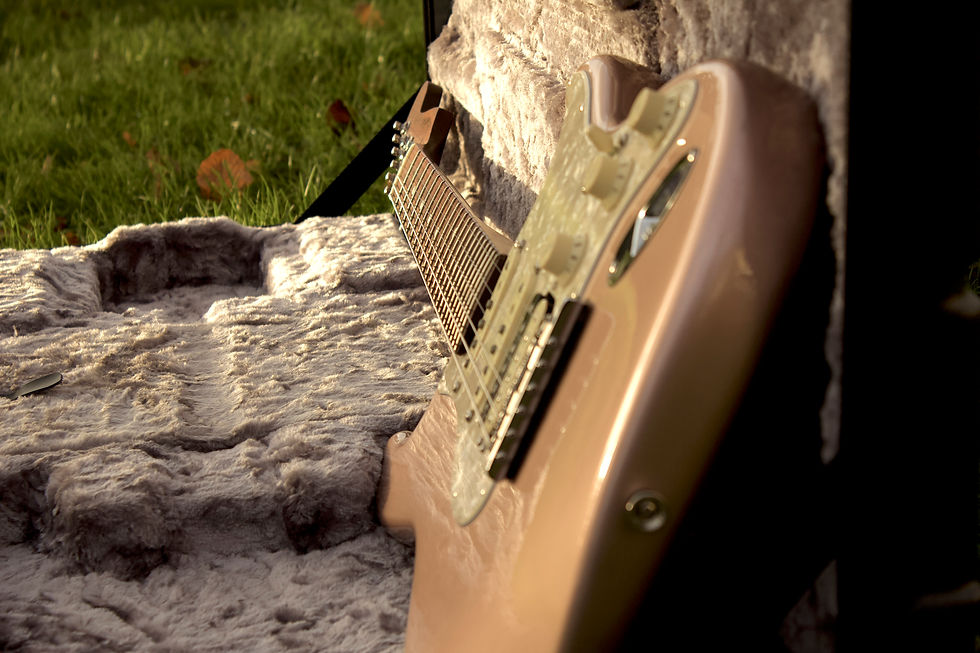
The Fender American Pro Limited Edition I am talking about is a unicorn, if a unicorn was a champagne pink guitar. At the time of its release, either as a taste test for audiences, or a first extremely limited run within a limited run, this was a rarity amongst quite unique instruments. I was told that, coming straight from NAMM that year, my local store had managed to pick up one of those guitars, and that it was one of only five that were slotted for the whole of Europe and UK.
At the time, mostly because I immediately fell in love with it, I half believed them and half wanted to be true, as it would be a crazy story to tell.
After the hype had passed, however, I feel that that one guitar, one in five, one in 300 in the whole world as I learned later on, was more than a simple instrument. I love playing it, it feels amazing, it sounds amazing, and it looks incredible. But there was something more about it.
It had…has a story to tell. I want to make a series of posts telling this story, things I remember, facts, maybe some in depth research, and what this one guitar created in my life.

The first chapter of this story was the birth of an idea. I wanted to bring a more detailed oriented and more academic way to collect and share ideas on collections. I also wanted to bring together collectors and musicians, people that were interested not just in music but how music is made, and the beautiful tools we use to create sounds. The culmination of this first chapter was the Guitar Apothecary, an event I organised with friends and interesting people, and the origin of Steam Pink.
In the next post I will tell the fascinating, and at times frustrating, story of the Guitar Apothecary, an event that brought collectors, makers, and musicians under the same roof for an evening of exchange of ideas and good music.

Comments